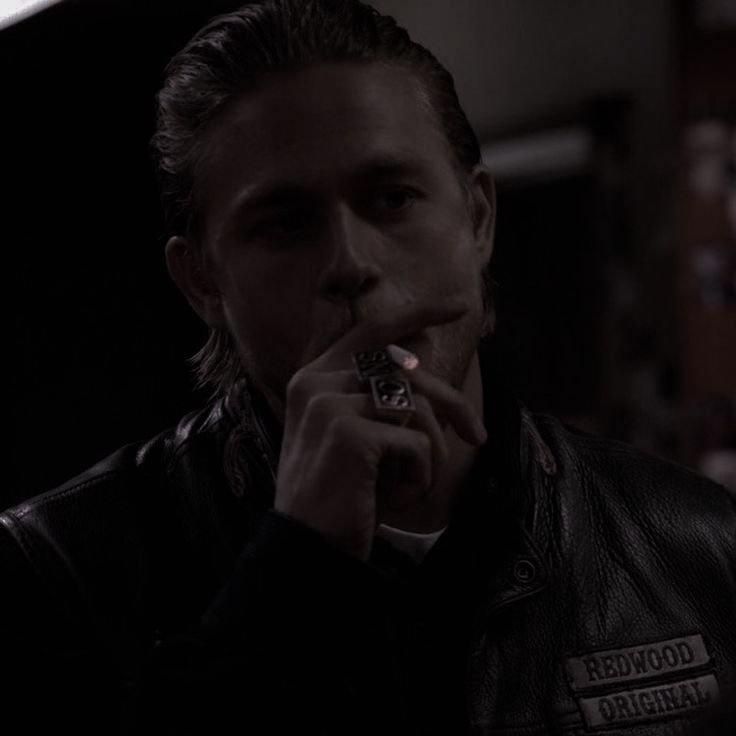
Stepping into the world of Charming, California, few characters cast a shadow as long and complex as Jax Teller. A true anti-hero, his journey isn't just a tale of motorcycle club loyalty, but a profound exploration of legacy, morality, and the desperate search for redemption within a life steeped in violence. This Jax Teller Character Deep Dive unearths the layers beneath the leather vest, revealing the conflicted soul who dared to dream of a different path for the Sons of Anarchy Motorcycle Club, Redwood Original (SAMCRO), even as he was dragged deeper into its bloody embrace.
At a Glance: Understanding Jackson "Jax" Teller
- Born into Outlaw Royalty: Son of SAMCRO founder John Teller and Gemma Teller-Morrow, Jax was destined for the club life.
- The Reluctant Heir: Initially Vice President, then President, he wrestled with club loyalty and its violent criminal activities.
- A Vision for Reform: Driven by his father's ideals, Jax aimed to legitimize SAMCRO, moving it away from arms trafficking.
- Moral Quandaries: Constantly torn between protecting his family (Gemma, his children) and his duties to the club.
- Tragic End: His life culminated in a devastating personal sacrifice for his children's future and the club's legacy.
- Enduring Appeal: His struggle for a "perfect outlaw" status, combined with his leadership and humanity, resonates deeply with fans.
The Serpent in the Garden: Jax's Inherited World
Born and raised in Charming, California, Jax Teller's childhood was anything but ordinary. His father, John Teller, was one of the original nine founders of SAMCRO. This meant Jax grew up not just around outlaw bikers, but as one of them. The roar of engines, the scent of exhaust, and the unspoken code of the club were the lullabies of his youth. His mother, Gemma Teller-Morrow, a force of nature in her own right, provided a fierce, if often manipulative, maternal love.
The foundational trauma of Jax's life, however, was the death of his father when Jax was just 15. This left a void that was quickly filled by Clay Morrow, John's best friend, who not only married Gemma but also took the gavel as SAMCRO's new president. This familial and leadership shift placed Jax in a complex, often conflicted, position, forever shadowed by the legacy of a father he barely knew but whose ideals he would spend his entire adult life trying to uphold. Officially a mechanic at the Teller-Morrow Auto Shop, Jax's real job was already stamped on his soul: a loyal son of anarchy.
The Seeds of Doubt: A Vice President's Disillusionment
From the outset, Jax wasn't merely a silent enforcer; he was the most introspective member of SAMCRO, constantly questioning the club's direction. While his primary role was initially Vice President, later rising to President, he saw the club as his family, inheriting its profitable yet perilous arms trafficking business with deep ties to the Irish Republican Army (IRA). This business, he felt, was a part of his father's legacy, yet he couldn't shake the feeling that SAMCRO had strayed far from its original purpose.
He became deeply disillusioned, viewing the club's violent, criminal activities with growing disapproval. This internal conflict wasn't just philosophical; it was intensely personal. Jax believed the current practices betrayed the club's founding ideals, a sentiment solidified by his discovery of his father's manuscript, "The Life and Death of SAMCRO: My Journey." John Teller's words painted a picture of a brotherhood founded on freedom and purpose, not merely a "bloody business" driven by profit and brutality. This revelation ignited a fierce desire in Jax to steer SAMCRO away from its nefarious dealings and towards a legitimate future, a mission that would define his tumultuous journey.
The Gavel of Change: Jax's Ascent to President
Jax's path to the presidency was less a smooth transition and more a brutal climb, paved with power struggles, betrayals, and devastating personal costs. He challenged Clay Morrow's corrupt and violent leadership, believing Clay had twisted John Teller's vision beyond recognition. This wasn't just about power; it was about the soul of SAMCRO. Jax's ascent required him to navigate treacherous waters, proving his loyalty and capability through force when necessary, but also earning respect through his clear, albeit often misguided, vision for reform.
His leadership style, while maintaining loyalty through a mixture of force and genuine respect, was fundamentally different. Jax sought to implement reforms that would lead to a different legacy—one free from the constant threat of prison and the corrosive effects of endless violence. He envisioned a club that could operate legitimately, providing for its members without the moral compromises inherent in arms dealing and gang warfare. This ambition, however, would constantly clash with the brutal realities of the outlaw world he inhabited, forcing him into a series of impossible choices. You can explore All about Jax Teller to further understand the intricacies of his character arc and leadership style.
A Man Divided: The Relentless Moral Dilemmas
Perhaps the most compelling aspect of Jax Teller's character was his constant battle with moral and ethical dilemmas. He struggled tirelessly to balance the immediate needs of the club—survival, profit, revenge—with his own internal moral compass. He deeply desired to be a good man, driven by loyalty and responsibility, particularly as an impending father to Abel and later Thomas. This desire for goodness was perpetually at odds with the demands of his outlaw life.
His efforts to protect his family—his mother Gemma, and especially his children—often conflicted savagely with his club responsibilities. Jax understood that the only way to truly secure his sons' future was to extract them from the club's orbit, a task that proved agonizingly difficult. His personal life was equally fraught with turmoil. He was separated twice from his wife, Wendy Case, largely due to her meth addiction and his own unpreparedness for fatherhood early on. He yearned for a mature, stable relationship with his high-school sweetheart, Dr. Tara Knowles, a woman who represented the legitimate life he craved, yet whom he ultimately dragged into his world's darkness.
The complexities of Jax's relationships highlighted his internal struggle. He was capable of profound love and fierce protectiveness, yet his actions often inflicted unimaginable pain on those closest to him. His journey is a masterclass in how circumstance, despite good intentions, can corner a man into making choices that redefine his very essence.
The Intertwined Destinies of Love and Loyalty
Jax's relationships with Wendy and Tara weren't just romantic subplots; they were critical mirrors reflecting his internal conflict. Wendy, a former addict and the mother of his first son, Abel, represented the chaotic, often destructive past he wished to escape. His initial rejection of her and Abel stemmed from his fear of repeating the cycle of broken families within the club.
Tara, on the other hand, was the embodiment of the alternative. A respected surgeon, she offered a glimpse of a normal, stable life—a safe haven for his children. Their love story was passionate but tragic, as Jax's attempts to protect her from SAMCRO only pulled her deeper into its violence. Her eventual demise, a direct consequence of his life choices and Gemma's desperate actions, shattered Jax's last hope for a legitimate future. These relationships underscore the impossibility of Jax's dream: he couldn't have both the club and the conventional happiness he so desperately craved for his family.
The Violent Pursuit of a "Better Way"
Jax's challenges extended far beyond internal struggles. He constantly battled to keep SAMCRO out of prison, managing unrelenting threats from law enforcement and rival gangs. From the Mayans to the Galindo Cartel, and various white supremacist groups, the list of SAMCRO's enemies was long and deadly. Every attempt to pivot the club towards legitimacy seemed to breed new enemies and demand more violence, creating a vicious cycle Jax couldn't escape.
He doubted the club's direction at every turn, deeply uncomfortable with its pervasive violence. The constant bloodletting, the retaliations, the body count—it all chipped away at his vision. He worried it had become merely a "bloody business," a far cry from the ideals of brotherhood and community his father had outlined. Jax was often forced to compromise his moral stance, engaging in brutal acts to secure the club's safety or to avenge wrongs, actions that weighed heavily on his soul even as they solidified his image as a fearsome leader. He was stubborn, brave, and a natural leader, yet his journey proved that even the strongest will could be broken by the relentless pressure of an outlaw existence.
Pitfalls of the "Perfect Outlaw" Ideal
John Teller's vision of a "perfect outlaw" was a romanticized notion, an ideal that Jax clung to with desperate hope. It suggested a life lived by one's own rules, unbound by conventional society, yet guided by a moral code of honor and loyalty. For Jax, this meant protecting the weak, standing up to tyranny, and maintaining the brotherhood's integrity.
However, the reality of SAMCRO in Jax's time was far removed from this ideal. The "perfect outlaw" frequently found himself entangled in drug wars, assassinations, and gangland politics that had no honorable outcome. Each step Jax took to purify the club seemed to soil his hands further, illustrating the fundamental contradiction of trying to find "purity" within an inherently criminal enterprise. The path to a "better way" was paved with the very violence he sought to escape.
The Unraveling: Trauma, Betrayal, and the Road to Armageddon
Jax Teller's final seasons were a relentless descent into personal devastation, marked by an accumulation of trauma and betrayal that would ultimately lead to his tragic end. The death of Tara Knowles, his wife and the mother of his children, was the cataclysmic event that fundamentally broke him. Unaware that his own mother, Gemma, was responsible, Jax spiraled into a furious quest for revenge, orchestrating a brutal war against the Chinese Triads, whom he mistakenly believed were Tara's killers.
This violent rampage, fueled by grief and a profound sense of injustice, consumed him entirely. It led to the deaths of countless innocent and guilty alike, further cementing SAMCRO's reputation for ruthlessness. The truth, when it finally emerged—that Gemma had murdered Tara in a fit of rage—shattered Jax's world beyond repair. The betrayal by his own mother, the woman he had always loved and protected, was the ultimate wound.
Faced with the collapse of his vision for SAMCRO, the loss of his wife, and the horrific reality of his mother's actions, Jax was left with nothing but ghosts and the burning desire to protect his sons from ever inheriting such a cursed life. His moral compass, once a guiding force, was now fragmented. The reforms he sought were unattainable, the promise of legitimacy a cruel mirage. His journey was no longer about changing the club, but about ensuring his children's survival—even if it meant his own destruction.
The Ultimate Sacrifice: A Glimmer of Redemption
Jax's journey culminated in a tragic, yet profoundly meaningful, end. With his entire world in ruins, his vision for SAMCRO irrevocably broken, and a stack of bodies attributable to his quest for vengeance, Jax made the ultimate choice: to end his own life. This wasn't an act of cowardice, but a desperate, final act of love and loyalty.
By choosing to die on his own terms, mirroring his father's fate on the highway, Jax achieved several critical objectives:
- Ensuring his Children's Survival: He knew that as long as he lived and was involved with SAMCRO, his sons, Abel and Thomas, would always be in danger of being drawn into the club's violent cycle. His death was the only way to truly break that chain, giving them a chance at a normal life outside Charming.
- Upholding SAMCRO's Legacy (on his terms): By dying by his own hand rather than being killed by the club for breaking its "no killing a patch-holder" rule (after he killed a fellow president from another charter), he prevented an internal war and preserved the club's future, albeit a future he wouldn't be a part of.
- Redemption: His final act, while tragic, was arguably the purest form of redemption available to him. It was a selfless choice, born of profound regret and a desperate desire to atone for the violence he had wrought. He died free, finally escaping the cage of SAMCRO, and allowing his children a chance at true freedom.
His death reflected the core themes of the series: the inescapable consequences of a life on the edge, the enduring power of loyalty, and the possibility, however bleak, of finding redemption through sacrifice. It's a testament to his character that even in his darkest hour, Jax Teller sought to find a path to protect those he loved, demonstrating that beneath the outlaw exterior beat the heart of a father yearning to be good.
Beyond the Reaper: Jax Teller's Enduring Legacy
Even after the final ride, Jax Teller's impact continues to resonate with fans worldwide. His character embodied the eternal struggle between fate and free will, demonstrating how even with the best intentions, the gravity of one's upbringing and environment can be nearly impossible to overcome. He was a paradox: a brutal leader who yearned for peace, a fiercely loyal outlaw who constantly questioned the outlaw code, and a loving father whose actions often put his family in mortal peril.
His story is a powerful narrative about the corrosive nature of violence, the heavy price of leadership, and the profound, often heartbreaking, sacrifices made in the name of family and brotherhood. Fans celebrate Jax Teller's legacy not just through discussions and analyses of his character, but also by connecting with his story through Sons of Anarchy merchandise, such as t-shirts and collectible memorabilia, keeping the spirit of SAMCRO's complex president alive. His tragic arc serves as a cautionary tale and a powerful reminder of the enduring human struggle for purpose and peace, even in the most tumultuous of worlds.
Frequently Asked Questions About Jax Teller
Was Jax Teller a good guy or a bad guy?
Jax Teller defies simple categorization. He was an anti-hero, capable of both immense love and brutal violence. While he genuinely sought to steer SAMCRO toward a legitimate future and protect his family, he committed numerous horrific acts driven by vengeance, loyalty, and the necessities of his outlaw life. His moral compass was constantly at war with his actions, making him a deeply conflicted character rather than strictly "good" or "bad."
Why did Jax Teller kill himself at the end?
Jax's suicide was a deliberate act of sacrifice and redemption. Faced with the collapse of his vision for SAMCRO, the death of his wife Tara, and the truth about his mother Gemma's actions, he saw no future for himself within the club or society. His death ensured his children's escape from the outlaw life and prevented an internal SAMCRO war, solidifying his legacy on his own terms and providing a tragic form of atonement.
How did Jax Teller's father influence him?
John Teller, Jax's deceased father, was a monumental influence, primarily through his manuscript detailing SAMCRO's original ideals and his disillusionment with the club's direction. Jax spent much of his life trying to honor his father's vision of a "perfect outlaw" and to rectify the perceived corruption of SAMCRO under Clay Morrow, believing he was continuing his father's unfinished work.
What was Jax Teller's biggest mistake?
While Jax made many mistakes, arguably his biggest was his inability to truly separate himself and his family from SAMCRO. Despite his constant desire for a legitimate life with Tara and his children, he continually dragged them deeper into the club's dangers, ultimately leading to Tara's tragic death and the destruction of his own hopes. He couldn't escape the gravitational pull of the club he inherited.
Reflecting on the Prince of Charming
Jax Teller's journey is a powerful narrative that continues to provoke thought and discussion years after Sons of Anarchy concluded. He stands as a testament to the idea that intention doesn't always pave the way to outcome, and that sometimes, the most profound acts of love are the most heartbreaking. His story challenges us to consider the fine line between loyalty and destruction, the weight of legacy, and the agonizing choices a person makes when trapped between the life they want and the life they were given. In the end, Jax's pursuit of a "better way" led him to the ultimate sacrifice, leaving behind a legacy as complex and compelling as the man himself.