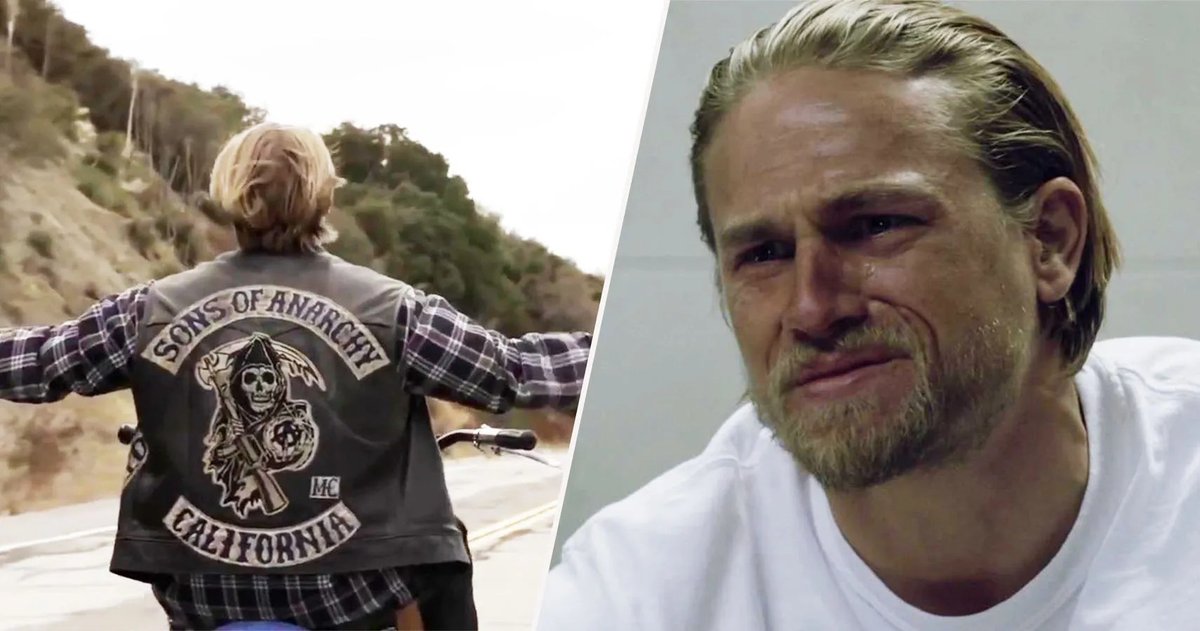
The rumble of Harleys echoing through Charming, California, wasn't just the sound of a motorcycle club; it was the persistent thrum of a family grappling with its own destructive legacy. At the heart of that struggle, for a pivotal period, stood Jackson "Jax" Teller, whose complex leadership and decisions as SAMCRO President didn't just shape the Sons of Anarchy Motorcycle Club, Redwood Original (SAMCRO)—they irrevocably altered his own fate and etched a bloody chapter into the club's history. From idealistic heir apparent to tragic, self-sacrificing king, Jax's tenure as president was a masterclass in the impossible choices that define outlaw leadership.
At a Glance: Jax Teller's Presidency
- Ascension: Took over SAMCRO presidency from his stepfather, Clay Morrow, driven by a desire to reform the club.
- Core Vision: To move SAMCRO away from its deep-rooted illegal gun trade and into legitimate businesses.
- Leadership Style: Blended strategic intellect, raw force, and a deep loyalty to his club and family, often leading with conviction but also impulsivity.
- Key Challenges: Navigating escalating wars with rival gangs, the cartel, and the Irish; confronting internal betrayals (Clay, Juice, Gemma); protecting his family.
- Defining Decisions: Orchestrating Clay's death, engaging with the Galindo Cartel, seeking revenge for Opie and Tara, and ultimately, his own self-sacrifice.
- Legacy: Ushered in a period of intense violence but also laid the groundwork for SAMCRO's eventual move away from guns under Chibs, at a devastating personal cost.
The Weight of the Patch: Jax's Reluctant Rise to Power
When we first meet Jax Teller, he's the conflicted Vice President of SAMCRO, the iconic mother charter founded by his late father, John "JT" Teller, and Piermont "Piney" Winston. The Sons of Anarchy, established in 1967 in Charming, California, was envisioned as a brotherhood, a haven for outlaws. However, by the time Jax began reading his father's manuscript, "The Life and Death of SAMCRO," the club had devolved significantly under President Clay Morrow. It was heavily entrenched in illegal gun running, a lifestyle that gnawed at Jax, who dreamed of a more legitimate path for his club—a path he believed his father had also sought.
Jax's early days were marked by a simmering tension between his loyalty to the club and his growing disillusionment with its increasingly violent and self-serving trajectory. He wrestled with the legacy of his father, whose picture remained on the clubhouse wall, uncrossed, a silent testament to SAMCRO's foundational ideals. This internal conflict—exacerbated by Clay's ruthless actions and his mother Gemma Teller Morrow's manipulative influence—became the crucible for his eventual leadership. His ascent wasn't a grab for power but a reluctant acceptance of a burden, driven by a desperate hope to steer the club back to its roots. To truly understand the man and the president, it's vital to explore your comprehensive guide to Jax Teller, which details his journey from prospect to president.
Vision vs. Reality: Jax's Ambition for SAMCRO's Future
Jax's presidency, which began in 2012 after he orchestrated Clay's removal and eventual execution, was fundamentally defined by one overarching goal: to exit the gun trade. He saw the proliferation of illegal firearms as the primary source of SAMCRO's endless cycles of violence, attracting powerful enemies like the Lin Triad, the Russian Mafia, and Pope Industries. His vision was to divest from the Irish Republican Army's guns, sever ties with the cartel, and transition SAMCRO into legitimate businesses, providing a safer, more stable future for his sons, Abel and Thomas.
This vision was noble but fatally flawed. The world Jax inhabited was deeply entrenched in outlaw culture, where loyalty was often bought with blood, and trust was a luxury. SAMCRO, under Clay, had formed alliances and rivalries that couldn't be simply dissolved. The club's identity was interwoven with its criminal enterprises, making a clean break akin to tearing out its very heart. Jax’s attempts to force this change would inadvertently ignite new conflicts and demand even greater sacrifices, proving that the road to redemption was paved with more violence than he could have ever anticipated.
Key Leadership Decisions & Their Ripple Effects
Jax's time at the helm was a relentless series of high-stakes decisions, each with catastrophic consequences, demonstrating the brutal realities of leading an outlaw organization.
The Strategic Gambit: Untangling the Irish and Embracing the Cartel
Early in his presidency, Jax made a calculated, albeit morally compromised, move to extricate SAMCRO from the Irish gun pipeline. He believed that if he could replace the Irish as the Galindo Cartel's gun supplier, SAMCRO could then leverage that relationship to eventually exit the trade. This decision, however, thrust SAMCRO deeper into the world of drug cartels and international crime, far from his original intention of legitimate business.
- The Cost: This strategy led directly to the brutal death of Opie Winston, a foundational member and Jax’s closest friend, at the hands of Damon Pope's men—a direct consequence of the cartel deal gone wrong. It was a wound that never truly healed, fueling Jax's personal vendetta and further blurring his moral lines.
Facing Internal Treachery: Clay and Juice
Jax’s presidency was marred by the constant need to address internal threats, most notably from Clay and later, Juice Ortiz.
- Clay Morrow's Downfall: Clay, a founder (First 9) and former President, was a toxic force, responsible for the deaths of JT, Piney Winston, and countless others. Jax meticulously worked to expose Clay's lies and crimes, leading to a club vote that removed Clay from power. His ultimate decision to execute Clay, disguised as an IRA hit, was a chilling demonstration of his evolving ruthlessness. It was a necessary evil for the club's survival but a deeply personal act that severed his last tie to a corrupted past.
- Juice Ortiz's Betrayal: Juice, a loyal but insecure member, became a pawn in various power struggles, eventually betraying SAMCRO multiple times. Jax initially tried to protect him, but Juice's repeated failures and deepening web of lies (including killing Eric Miles and Eli Roosevelt) forced Jax to make another difficult choice: sending Juice into prison to kill Henry Lin, knowing it was a death sentence for Juice himself. This decision highlighted Jax's cold, calculating side, prioritizing the club's survival and his vendettas over personal loyalty, even for a brother.
The Vicious Cycle of Revenge: Pope, Marks, and the Triads
The death of Opie ignited a chain reaction of revenge that consumed much of Jax's presidency.
- Damon Pope's Demise: After Opie's murder, Jax orchestrated a complex plan to avenge his friend, ultimately leading to Damon Pope's death. This act, while satisfying personally, drew SAMCRO into an even more dangerous game with Pope's successor, August Marks, a far more cunning and powerful adversary.
- The War with Henry Lin: Misled by Gemma about Tara's killer, Jax declared war on the Lin Triad. This conflict drained SAMCRO's resources, cost lives on both sides, and set the stage for further tragedy. It was a decision based on misinformation, demonstrating how personal grief and manipulation could derail strategic thinking.
The Ultimate Price: Tara and Gemma
Perhaps the most agonizing decisions Jax faced involved his immediate family, blurring the lines between club loyalty and personal devastation.
- Tara's Sacrifice: His wife, Tara Knowles-Teller, fought desperately to save her children from the club's violent pull, mirroring JT's attempts. Jax's repeated failures to truly protect her, even as he promised a way out, led to her tragic murder by Gemma. This event pushed Jax beyond redemption, transforming his leadership from one of reform to one of vengeance.
- Gemma's Reckoning: The discovery of Gemma's role in Tara's death, along with Wayne Unser’s desperate plea to spare his mother, forced Jax to confront the ultimate betrayal. His decision to kill Gemma, his own mother, in a quiet garden, was the final, agonizing step in his descent. It was an act of profound personal horror but also, in his twisted logic, a form of justice and a final severing of the manipulative ties that had bound him to a destructive past. It was a decision that mirrored the "eye for an eye" ethos that had defined his presidency.
The Moral Compass: Blurred Lines and Tragic Choices
Jax Teller's leadership was a constant tightrope walk across a chasm of moral ambiguity. He began with a clear moral compass, driven by his father's words and a desire for a better life for his sons. Yet, the realities of SAMCRO's world—the need for alliances, the demands for retribution, the constant threat of annihilation—forced him into choices that incrementally chipped away at his soul.
He often justified horrific acts by framing them as being "for the good of the club" or "for his family." He murdered Josh Kohn, Liam O'Neill, Hector Salazar, Viktor Putlova, Galen O'Shay, and many others, often with a cold resolve that belied his initial idealism. The killings of Clay Morrow and Gemma Teller Morrow, though rooted in justice for past wrongs and extreme betrayal, showcased the ultimate dissolution of his personal moral boundaries. He became what he despised: a man willing to commit any atrocity to protect his perceived interests, sacrificing innocence and integrity on the altar of loyalty and vengeance.
Leadership Style: Force, Intellect, and Empathy
Jax Teller's leadership style was a complex blend, distinct from Clay's brute force and fear-mongering.
- Strategic & Intelligent: Jax was a sharp tactician, often thinking several steps ahead. He meticulously planned Clay's downfall, navigated intricate gang politics, and brokered complex deals. He understood leverage and how to exploit weaknesses.
- Charismatic & Respected: He commanded natural respect from his brothers, often earning their loyalty through his commitment to the club's well-being and his willingness to lead from the front. His charisma allowed him to rally SAMCRO even in the darkest times.
- Emotionally Driven, to a Fault: While strategic, Jax was profoundly influenced by his emotions, particularly grief and anger. Opie's death, and especially Tara's, sent him on paths of destruction that superseded logical planning, leading to reckless decisions that cost many lives, including those of Bobby Elvis and Wayne Unser.
- Deeply Loyal (Internally): Despite his ruthless streak, Jax was fiercely loyal to his SAMCRO brothers. He valued the brotherhood above almost all else, even if that loyalty sometimes demanded unthinkable acts from him. This loyalty extended to his children, for whom he made the ultimate sacrifice.
The Teller Legacy: What Jax Left Behind
By the series' end, SAMCRO was a vastly different club than the one Jax inherited.
- A Club Without Guns: Jax achieved his primary goal: he got SAMCRO out of the gun business. This was solidified when Chibs Telford, his successor, cemented a deal with the Mayans and the One-Niners to move into more legitimate ventures, paving the way for SAMCRO to operate without the same deadly ties.
- Devastated but United: The club suffered immense losses under his leadership—Opie, Bobby, Juice, Tig's daughter Veronica, and countless others. Yet, the remaining members, led by Chibs and Tig, emerged fiercely loyal to Jax's final vision.
- The Sons Continue: SAMCRO remains an active charter, with Chibs Telford as President and Tig as VP, having seen through Jax's final directive. The mother charter, while influential, cannot dictate to other Sons charters, adhering to the club's democratic structure. Notably, the club eventually embraced Taddarius Orwell "T.O." Cross as its first African-American member, a significant step in breaking down old prejudices.
- His Sons' Future: Jax's ultimate sacrifice was to ensure his sons, Abel and Thomas, would escape the club life, mirroring his own father's hopes for him. He believed his death was the only way to break the cycle of violence that had consumed generations of Tellers.
Lessons from the Reaper's Son: What Jax's Story Teaches Us About Leadership
Jax Teller's tragic narrative offers profound, albeit dark, insights into the nature of leadership, especially in extreme circumstances:
- Vision is Crucial, but Context is King: Jax had a clear vision for SAMCRO, but he often underestimated the deep-seated resistance and the violent ecosystem he was trying to change. Leadership requires understanding the inherent limitations and complexities of the environment.
- The Cost of Compromise: Every moral compromise, no matter how small or seemingly necessary, can erode integrity. Jax's journey shows a slippery slope where initial "necessary evils" paved the way for unthinkable atrocities.
- The Peril of Personal Vendettas: While a leader must protect their people, allowing personal grief and vengeance to drive decisions can lead to irrationality and greater devastation. Jax's quest for revenge for Opie and Tara overshadowed his strategic goals.
- Legacy Through Sacrifice: Sometimes, true leadership culminates in self-sacrifice for the greater good of the entity one leads. Jax's final act, though grim, was a selfless decision to ensure his children and his club had a chance at a different future.
- The Burden of the Crown: Leadership, particularly in high-stakes environments, often comes with an unbearable personal cost. Jax paid the ultimate price, losing his family, his friends, and ultimately his life, highlighting the crushing weight of responsibility. For more on the internal battles that defined him, explore your comprehensive guide to Jax Teller.
FAQs: Unpacking Jax's Presidency
Was Jax Teller a good president for SAMCRO?
This is highly debatable. On one hand, he achieved his goal of ending SAMCRO's involvement in the gun trade, steering the club towards a more legitimate future. He was a strategic thinker and deeply loyal. On the other hand, his presidency was marked by unprecedented violence, costing SAMCRO many beloved members like Opie and Bobby, and pushing the club to the brink. His personal vendettas often overshadowed his strategic vision, leading to devastating consequences.
Did Jax truly want to get SAMCRO out of the gun business?
Absolutely. This was his driving motivation, inspired by his father's original ideals. He saw the gun trade as the root of SAMCRO's problems and the primary threat to his children's future. His efforts, though often messy and violent, were consistently aimed at this goal.
How did Jax Teller die?
Jax Teller committed suicide in the final episode of Sons of Anarchy. After ensuring SAMCRO was set on a path out of the gun trade and avenging the deaths of Tara and Bobby, he rode his motorcycle directly into an oncoming truck, mirroring his father's presumed death. This act was his ultimate sacrifice to break the cycle of violence for his sons and to uphold the club's code of meeting Mr. Mayhem.
Who became President after Jax?
Filip "Chibs" Telford became the President of SAMCRO after Jax Teller's death in 2013, with Alexander "Tig" Trager stepping into the role of Vice President. They were entrusted with carrying out Jax's final vision for the club.
The Final Ride: A President's Ultimate Sacrifice
Jax Teller's journey as SAMCRO President is a searing exploration of power, legacy, and the inescapable gravity of choice within a world built on violence. He sought to dismantle the corrupt foundations laid by his predecessors, driven by a yearning for a cleaner slate for his sons. Yet, in his pursuit of justice and redemption, he became a mirror of the very darkness he fought, a king drenched in the blood of his enemies and, ultimately, his loved ones.
His final ride wasn't just an act of self-destruction; it was a desperate, ultimate act of leadership. By choosing his own death, Jax aimed to pay for his sins, protect his children from the club's grim embrace, and ensure SAMCRO could genuinely evolve beyond the bloodshed. It was a tragic, irreversible decision that cemented his place not just as a president, but as a sacrifice—a son of anarchy who finally broke the cycle, even if it meant breaking himself completely. His story is a brutal reminder that sometimes, the only way to truly lead is to know when to let go, even of life itself, for the sake of what comes next.