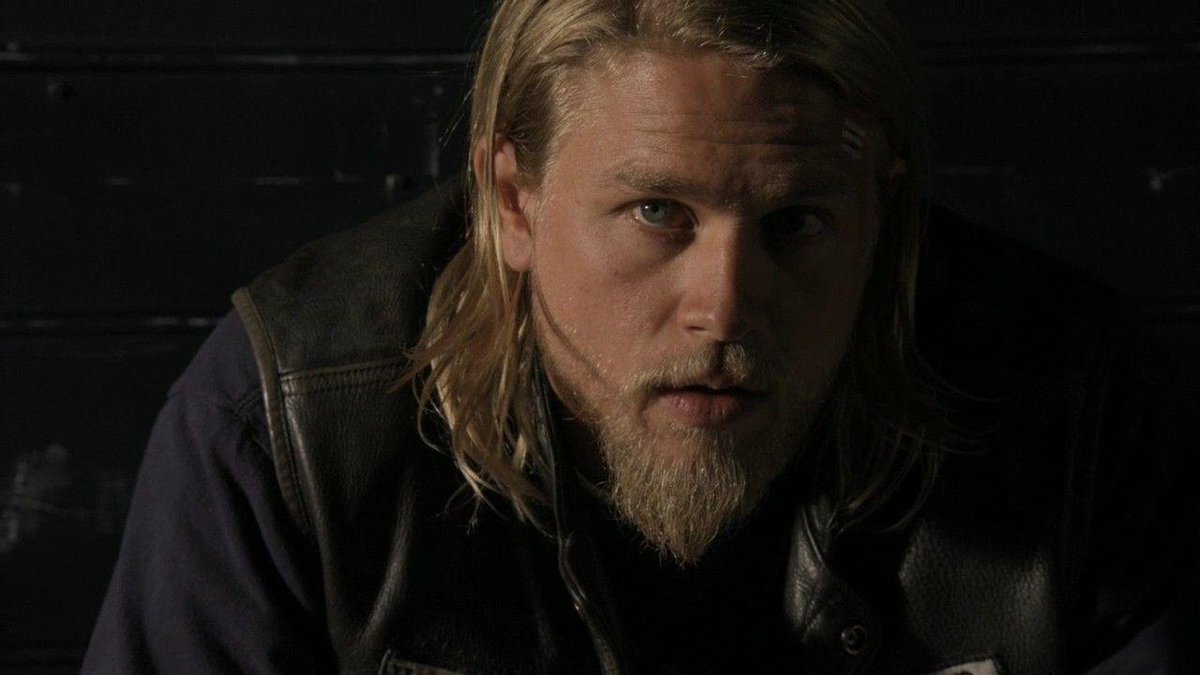
Jax Teller, the haunted antihero of Sons of Anarchy, rode a path paved with good intentions and stained with blood. His journey from conflicted heir to tragic kingpin wasn't a solo ride; it was profoundly shaped by the key relationships and impact on Jax Teller that defined his world. From the echoing ideals of a dead father to the suffocating grip of a manipulative mother, and the fierce, often fatal, loyalty of his brothers, every bond Jax forged or inherited pulled him deeper into the violent vortex he desperately tried to escape. To truly understand Jax, you must understand the people who built him, broke him, and ultimately, doomed him.
At a Glance: How Key Relationships Shaped Jax Teller
- Family Legacy: John Teller's vision haunted Jax, while Gemma's manipulative love and protection often steered him towards violence.
- The Women in His Life: Tara was his hope for redemption, Wendy a challenging path to stability, both impacted by the club's relentless pull.
- Brotherhood's Corruption: Clay Morrow embodied the club's darkest side, forcing Jax to confront betrayal. Opie, Chibs, and Tig represented the complex spectrum of loyalty and sacrifice.
- The Burden of Leadership: As President, Jax grappled with impossible choices, often sacrificing his moral compass for the perceived good of SAMCRO.
- Cycle of Violence: His relationships with law enforcement and rivals consistently underscored the inescapable nature of his outlaw life.
- Tragic Archetype: Jax's internal struggles, often mirrored in literature like Hamlet, were intensified by the personal stakes of his relationships.
The Burden of Blood: Family Ties that Bind (and Break)
No force was more potent in shaping Jax Teller than his family. It was a complex web of love, loyalty, resentment, and manipulation that served as both his greatest motivation and his deepest wound.
John Teller's Ghost: The Unattainable Ideal
Jax’s father, John Teller (JT), SAMCRO’s founder, was a presence felt in every episode, despite having died before the series began. JT's manuscript, "The Life and Death of SAMCRO: My Testimony," served as Jax's bible – a yearning for a cleaner, more legitimate club. This literary connection deepens Jax's tragic narrative, reflecting an archetypal hero's struggle where flaws ultimately lead to downfall. JT represented an idealistic vision that constantly clashed with the club's darker realities, driven largely by Clay Morrow and Gemma Teller. Jax's entire arc is, in many ways, an attempt to honor JT's original vision, even if it meant tearing the club apart to rebuild it. The idealism of JT was a beacon, but also a chain, binding Jax to a destiny he often fought against.
Gemma Teller: The Manipulative Matriarch
Gemma Teller (Katey Sagal), Jax's mother, was the queen bee, a force of nature whose love for Jax was fierce, unwavering, and utterly destructive. Her influence was profound, often guiding Jax's morally gray decisions. Gemma’s manipulative tactics, her desperate need to control her family and the club, repeatedly pushed Jax down darker paths, whether directly through lies and secrets or indirectly by shielding him from uncomfortable truths. Her shocking murder of Tara, and subsequent lies, ultimately sealed Jax's own tragic fate. Gemma’s character embodies the idea that love, when twisted by trauma and control, can become the most poisonous bond of all. She was his protector, his confidante, and his ultimate undoing.
Tara Knowles: The Hope for a New Life (and its Violent End)
Dr. Tara Knowles (Maggie Siff) was Jax's high school sweetheart and the ultimate symbol of his hope for redemption and a legitimate life for his children, Abel and Thomas. Their romance embodied his aspiration to steer SAMCRO toward a less violent future, away from the motorcycle club's grasp. Tara represented an escape – a chance at normalcy, a white picket fence instead of jail bars.
Their relationship was a constant tug-of-war: Tara trying to pull Jax into the light, and the club, or Jax's own nature, pulling her into the darkness. Her transformation from an outsider attempting to save Jax to a full-fledged "old lady," willing to commit crimes for the club's survival, speaks volumes about the corrupting power of SAMCRO. Tara’s tragic death at Gemma’s hands wasn't just a personal loss for Jax; it was the brutal extinguishing of his last real chance at escaping the cycle of violence, propelling him deeper into vengeful leadership. It was a stark reminder of the grim repercussions Jax's reliance on violence brought upon his loved ones.
The Sons: Abel & Thomas, A Legacy to Break
Abel and Thomas Teller were Jax's ultimate motivation. He wanted to break the generational curse, to ensure his sons wouldn't inherit the life of an outlaw. This desire fueled many of his decisions, particularly his attempts to transition SAMCRO into legitimate businesses. The repeated threats to his children's safety, the kidnapping of Abel, and the constant exposure to violence were agonizing for Jax. He ultimately believed his greatest act of love would be to ensure they never knew the life of the Sons, culminating in his poignant final act to free them from his shadow. The future of his children was the only true north Jax ever consistently tried to follow, no matter how crooked the path became.
Wendy Case: A Rocky Path to Stability
Wendy Case (Drea de Matteo), Abel's biological mother, began the series as a drug addict, a constant source of friction and concern for Jax. Their relationship was tumultuous, marked by Jax's initial distrust and disdain. However, as Wendy found sobriety and fought for a place in her son's life, she slowly became a surprising source of stability. By the series' end, Wendy represented a final, fragile hope for his sons – a chance for them to grow up away from the club. Jax entrusting his boys to her was a testament to his evolving understanding of what true family sacrifice meant, and his recognition of Wendy's own redemption. For everything you need to know about this complex character, check out everything about Wendy Case.
Brotherhood's Double Edge: Loyalty, Betrayal, and the Club
SAMCRO wasn't just a motorcycle club; it was a surrogate family, a brotherhood whose bonds were thicker than blood, but also profoundly corruptible. Within SAMCRO, loyalty was fierce but flawed, leading Jax into moral dilemmas where loyalty could mutate into betrayal.
Clay Morrow: The Father Figure Turned Nemesis
Clay Morrow (Ron Perlman) was Jax's stepfather and the President of SAMCRO for many years. Their relationship was the bedrock of the series' central conflict. Clay embodied the club's darker, more mercenary side, a stark contrast to John Teller's ideals. Initially, Clay was a father figure to Jax, teaching him the ways of the club. However, as Jax delved deeper into JT's writings and uncovered Clay's betrayals – including his role in JT's death and his continued involvement in gun-running and drug deals – Clay became Jax's ultimate nemesis. Their dynamic was a tragic exploration of how love, respect, and shared history can devolve into bitter hatred and fatal confrontation. Jax's eventual execution of Clay was not just an act of vengeance but a violent severing of the club's past, an attempt to cleanse its corruption.
Opie Winston: The Cost of Loyalty
Harry "Opie" Winston (Ryan Hurst) was Jax's oldest and closest friend, a bond forged in childhood. Opie was the embodiment of unwavering loyalty, standing by Jax through thick and thin, often paying a terrible price for it. Opie’s journey was arguably even more tragic than Jax’s, as he was repeatedly stripped of everything he loved due to the club: his wife Donna, his father Piney, and ultimately, his own life, sacrificed to save Jax in prison. Opie’s death deeply impacted Jax, pushing him further into the ruthless pragmatism of leadership. It solidified his understanding of the ultimate cost of the outlaw life and fueled his determination to find a way out for his own children. Opie's loyalty was a mirror reflecting the inherent dangers of the brotherhood. You can learn more about his pivotal role here: Opie Winston's legacy within SAMCRO.
Chibs Telford: The Unwavering Anchor
Filip "Chibs" Telford (Tommy Flanagan) was Jax's most loyal and trusted confidante, his sergeant-at-arms and later, his successor as President. Chibs was a steady, moral presence, often serving as Jax's emotional anchor and a voice of reason. Their bond was one of deep respect and genuine affection, forged through countless battles. Chibs's unwavering support, even when Jax made difficult or morally questionable decisions, highlighted the complex nature of club loyalty. He understood Jax's burdens better than most and was always there to offer a solid, if often gruff, perspective. Chibs represented the positive, enduring aspects of the brotherhood that Jax sought to preserve.
Tig Trager: The Enforcer's Complex Devotion
Alex "Tig" Trager (Kim Coates) was initially Clay's loyal enforcer, known for his violent impulses and peculiar kinks. Yet, as Jax ascended to power, Tig slowly shifted his loyalty. His devotion to Jax, though often expressed through unhinged violence, became fiercely personal. Tig's journey was one of gradual redemption and a deepening, if often twisted, emotional core. His willingness to sacrifice himself for Jax, and his profound grief over the death of his daughter, highlight the complicated layers of his character. Tig showcased how even the most damaged members of the brotherhood could find a form of loyalty that transcended their darker natures.
Bobby Munson: The Moral Compass Lost
Robert "Bobby Elvis" Munson (Mark Boone Junior) served as SAMCRO's treasurer and often its moral compass. He was a voice of reason, a peacemaker, and someone who consistently tried to guide Jax towards a more peaceful, strategic path. Bobby’s steadfast commitment to the club's true principles made him a critical counterpoint to Clay's corruption and later, a crucial, if sometimes frustrated, ally to Jax. His tragic torture and death at the hands of August Marks was a devastating blow to Jax, robbing him of a trusted advisor and further cementing the cycle of violence. Bobby’s loss was a symbol of how even the strongest moral centers could be crushed by the club's brutal realities.
Beyond the Club: External Pressures and Philosophical Struggles
Jax’s relationships weren't confined to the immediate circle of family and club. His struggles with external authority figures and his own intellectual leanings profoundly impacted his journey, illustrating broader themes of cyclical crime and societal injustice.
Law Enforcement: Eli Roosevelt and the System's Grip
Jax's battles with law enforcement figures, particularly Sheriff Eli Roosevelt (Rockmond Dunbar), mirrored broader themes of cyclical crime and societal injustice, highlighting struggles against the system. Roosevelt represented the often-frustrated attempt of the law to contain the anarchy of the club. Their relationship was one of mutual respect despite being on opposite sides of the law, a nuanced portrayal that avoided simple good-vs-evil tropes. Jax also had significant dealings with federal agents like Stahl and Patterson, whose relentless pursuit of SAMCRO repeatedly escalated conflicts and forced Jax into ever more desperate measures. These external pressures continually reminded Jax that even if he could reshape the club, he could never truly escape the consequences of its existence.
Rival Clubs & Criminal Enterprises: The Constant Cycle of Conflict
SAMCRO's existence was inextricably linked to its relationships with rival motorcycle clubs (e.g., Mayans, Grim Bastards, Neo-Nazis) and various criminal enterprises (e.g., the Cartel, the Irish Kings, August Marks). These alliances and rivalries were the engine of much of the series' plot, constantly forcing Jax to make difficult, often violent, decisions to protect his club and his family. The shifting loyalties, backstabbing, and constant need for retaliation trapped Jax in a never-ending cycle of conflict. Each new enemy or strained alliance pulled him further from his goal of legitimacy, demonstrating how his reliance on violence for protection and survival cast a shadow, leading to grim repercussions.
The Hamlet Analogy: Jax's Internal Conflict
Jax's connection to literature, particularly works like Hamlet, deepens his tragic narrative. He frequently grappled with an internal struggle, torn between inherited duty and his own moral compass, much like Shakespeare's prince. His internal monologues, often delivered through his voiceovers as he wrote in his journal (mirroring his father's manuscript), revealed a man acutely aware of the paradoxes and moral compromises of his life. This intellectual side, informed by his father's words and his own reflections, created a stark contrast with the brutal actions he often had to take, driven by the pressures of his relationships and his role. This inherent conflict made his downfall all the more poignant. To truly grasp the complexity of his character, delve into everything about Jax Teller.
The Motorcycle's Call: Freedom and Imprisonment
The motorcycle served as a powerful symbol for Jax, representing both his yearning for liberation and his entrapment within a life of crime and club obligations. His relationship with his bike, and the open road, was his purest form of freedom. Yet, the kutte he wore and the club it represented tethered him to a life he wanted to escape. This duality – the freedom of the ride vs. the chains of his circumstances – was a constant undercurrent. His final ride, mirrored in his father's own demise, was the ultimate expression of this paradox: a final act of liberation that was also an ultimate submission to his fate.
The Echoes of Leadership: Jax's Tragic Legacy
Jax's journey begins as a reluctant outlaw, conflicted between his personal ideals and loyalty to SAMCRO. External pressures and escalating conflicts within the club and with rivals propel him towards leadership. He asserts control, confronting problematic elements and striving to reshape the club to honor his father’s original vision. As president of SAMCRO, he evolves into a pragmatic leader, making difficult decisions, managing threats, and balancing personal desires with the demands of his role.
Redemption's Elusive Promise
Jax Teller spent much of his time as SAMCRO President striving for redemption – for himself, for his club, and most importantly, for his sons. He genuinely wanted to steer SAMCRO toward legitimate enterprises and away from the drugs, guns, and violence that had plagued it. Yet, every step towards redemption seemed to pull him deeper into the very darkness he fought against. The cycle of violence, fueled by past grievances and new betrayals, proved inescapable. His relationships, intended to be anchors for a new life, often became conduits for tragedy. The constant pull between his desire for a peaceful future and the brutal necessities of his present ultimately left redemption just out of reach.
The Price of Power: What Jax Sacrificed
Wielding the gavel of SAMCRO came with an immense price. Jax sacrificed his innocence, his moral purity, and eventually, his own life. The burden of leadership, exacerbated by the relentless pressures from his family and club, forced him to make increasingly difficult, often horrific, decisions. He became a pragmatic leader, willing to shed blood, break laws, and betray allies if he believed it was for the greater good of SAMCRO or his children. This evolution transformed him from a conflicted outlaw to a commanding, albeit tragic, figure. The show relentlessly explored the cost of loyalty, the pursuit of redemption, and the complex burdens and sacrifices that come with wielding power.
The Enduring Cultural Impact
The impact of Jax's legacy extends beyond the screen, sparking discussions on loyalty, morality, masculinity, generational identities, and representation within the biker community. His story resonates because it taps into universal themes of family, destiny, and the struggle to be a good person in a corrupt world. Charlie Hunnam’s portrayal drew inspiration from real-life biker cultures, and creator Kurt Sutter infused personal experiences into the narrative, adding layers of authenticity. Jax Teller remains a compelling, tragic figure precisely because of the weight of the relationships that defined his impossible life.
Reflecting on the Man: What His Relationships Reveal
Jax Teller was a man forged in the fires of loyalty and betrayal, his every decision reflecting the tangled web of his relationships. His journey teaches us that even the purest intentions can be corrupted by circumstance, and that the ties that bind us can also be the ones that break us.
From his deep-seated desire to honor his father's original vision to his fierce, often misguided, protection of his mother and club, Jax was a product of his connections. Tara represented his potential for a better life, while Clay embodied the darkness he needed to overcome. His loyalties to Opie, Chibs, and Tig highlighted the enduring, yet brutal, nature of brotherhood.
Ultimately, Jax's story is a profound exploration of how our relationships – good, bad, and ugly – not only shape who we become but also dictate the paths we take, for better or for worse. He ended his ride as he began it: deeply loved, profoundly flawed, and inextricably linked to the people who made him the tragic king he was destined to be.