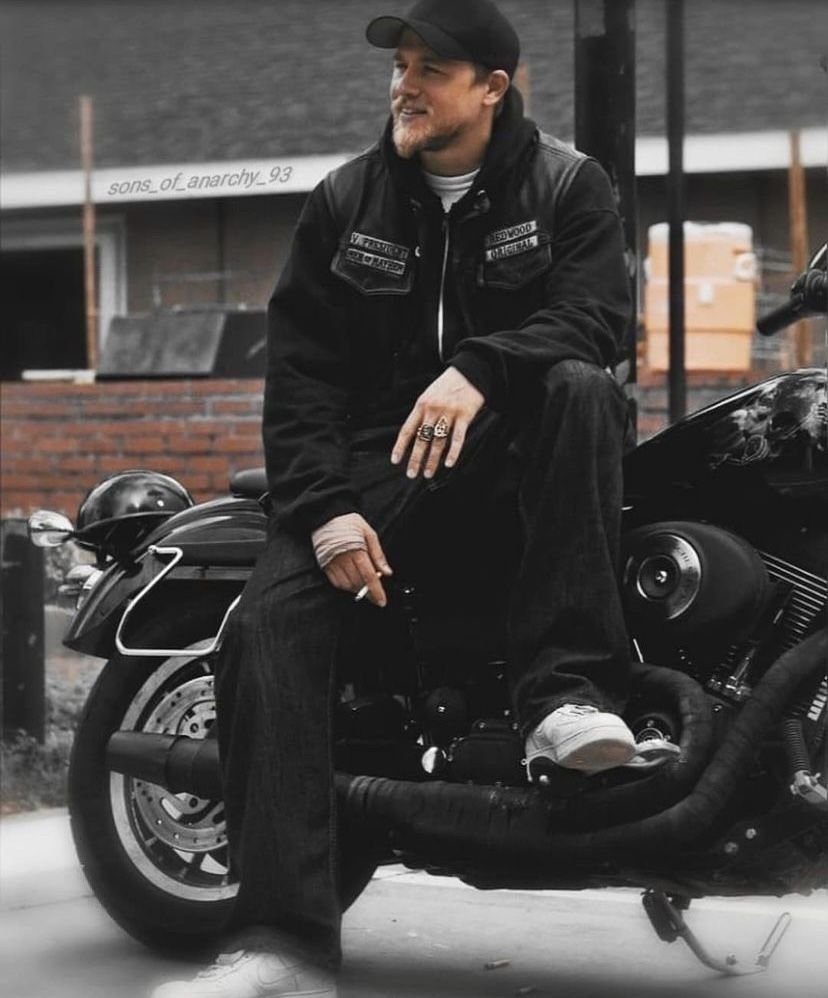
The roar of a custom Harley-Davidson, the open road, and a destiny that had been chasing him since birth – this is how Jax Teller met his end. The death of Jax Teller & his legacy isn't merely a tragic plot point in Sons of Anarchy; it's the culmination of a Shakespearean saga, a sacrifice weighed against the future of his family, his club, and his own soul. For six seasons, we watched Jackson "Jax" Teller navigate the brutal, morally ambiguous world of SAMCRO, grappling with the ghosts of his past and the grim realities of his present. His ultimate act wasn't just a suicide; it was a carefully orchestrated final play, a desperate attempt to break a cycle of violence and save those he loved most.
This isn't just a recap; it's a deep dive into the why and how of Jax's final ride, exploring the profound impact he left behind, and why his story continues to resonate long after the final credits rolled.
At a Glance: Jax Teller's Final Chapter
- Who He Was: Jackson "Jax" Teller, protagonist of Sons of Anarchy, Vice President turned President of the Sons of Anarchy Motorcycle Club Redwood Original (SAMCRO).
- His Core Conflict: Torn between his outlaw loyalty and his desire to legitimize the club, honor his father's vision, and protect his sons from the life.
- Key Drivers to His Demise: The murder of his wife, Tara Knowles, by his mother, Gemma; the unraveling of club loyalties; his growing disillusionment with the outlaw life.
- The Sacrifice: Jax intentionally collided with a semi-truck on the interstate, mimicking his father's death, as a final act of self-preservation for his family and the club's future.
- His Legacy: A complex, often contradictory figure whose actions reshaped SAMCRO, leaving behind a new era for the club, two sons with a chance at a different life, and a shadow that still looms over the Mayans MC universe.
- Hamlet Parallel: His character arc draws heavily from William Shakespeare's Hamlet, reflecting themes of revenge, betrayal, and a prince struggling with a poisoned kingdom.
The Road to Redemption, Paved with Blood
From the moment we met Jax Teller, there was a palpable tension between the man he was and the man he wanted to be. Born into the gritty reality of SAMCRO, he was a prince of Charming, California, destined to wear the patch his father, John Teller, helped forge. But John Teller's manuscript, "The Life and Death of SAM CROW: How the Sons of Anarchy Lost Their Way," became both Jax's guiding star and his curse. This document, filled with his father's disillusionment and longing for a less violent, more community-focused club, ignited Jax's own internal conflict.
Jax was a mechanic, a loyal son, a devoted father to Abel and Thomas, and a leader with a fierce sense of loyalty to his brothers. Yet, he was also a man steeped in violence, capable of brutal acts when driven by perceived necessity or burning revenge. This dichotomy defined him. He sought to steer SAMCRO away from gunrunning, to legitimize its operations, and to protect his family from the club's inherent dangers. He aimed for a redemption he knew might cost him everything, and in the end, it did. His journey was a constant dance on the edge of a blade, trying to honor a legacy while forging a new one, all while the specter of his father's fate loomed large. For those wanting a deeper dive into the character's journey, you can discover more about Jax Teller and his pivotal role in the series.
A Son's Reckoning: Key Events and Turning Points
Jax’s path to self-destruction was a gradual one, marked by a series of devastating events that chipped away at his idealism and forced him to make increasingly brutal choices. These aren't just plot points; they're the scars on his soul, each pushing him closer to the edge.
The Siren Song of Mayhem: Early Sins and Loyalties
From the outset, Jax’s life was intertwined with SAMCRO's brutal demands. His relationship with Dr. Tara Knowles, a neonatal surgeon, represented a chance at a normal life, a stark contrast to the chaos of the club. Yet, even this relationship was quickly soiled by violence, like Jax's murder of Tara's stalker, ATF agent Josh Kohn.
Then came the accidental death of Opie Winston's wife, Donna, orchestrated by Clay Morrow and Tig Trager. This event was a seismic shock, a stark reminder of the corrosive nature of the club's power plays and a foundational betrayal that would haunt Jax and Opie. It ignited a slow-burn resentment in Jax towards Clay and the old guard, fueling his desire for change.
The kidnapping and rape of Gemma Teller by the League of American Nationalists (LOAN), while a horrific personal attack, also served as a catalyst for deeper club involvement, pulling Jax further into the cycle of vengeance. The subsequent kidnapping of his son Abel led SAMCRO to Belfast, where Jax discovered his father's secret family and a half-sister, Trinity, revealing yet another layer of John Teller's complicated past.
The Weight of the Patch: Presidency and Impossible Choices
Jax's rise to power was not a smooth ascent but a violent takeover. Upon learning of Clay's involvement in John Teller's death and his attempt on Tara's life, Jax's loyalty to his stepfather shattered. The revelations about Clay’s betrayal, coupled with the ongoing struggles to navigate treacherous deals with groups like the Galindo Mexican drug cartel, intensified Jax’s resolve to clean up the club.
His eventual forced removal of Clay Morrow from the presidency and his own ascension to the top patch was a pivotal moment. It wasn't a triumph; it was a burden. Jax inherited a club steeped in illicit activities, a legacy of violence he desperately wanted to undo. His efforts to grow SAMCRO's legal escorting business with Nero Padilla and remove the club from gunrunning were constant uphill battles, leading to conflicts with the IRA and the murder of SAMCRO members Phil Russell and V-Lin. He was trapped between the need to protect his brothers and his vision for a reformed SAMCRO.
Unraveling Trust: Betrayals and Revelations
The personal toll of his presidency was immense. The death of Opie Winston in county jail at the hands of Damon Pope was a devastating blow, robbing Jax of his closest friend and moral compass. This event cemented a deep-seated thirst for revenge, leading Jax to strike a deal and later orchestrate Pope's murder, further staining his hands.
As Jax became more ruthless in his pursuit of a "clean" club, loyalty became a commodity. Learning that Juice Ortiz was informing law enforcement was another betrayal that chipped away at Jax's faith in his inner circle. He was forced to make impossible decisions, sacrificing brothers for the greater good of the club, or so he believed. The executions of Clay Morrow and IRA boss Gaalen O'Shay, while arguably deserved, marked Jax's full transformation into a cold, calculated leader willing to do whatever it took.
The ultimate betrayal, however, was also the most intimate: Gemma murdering Tara Knowles. Tara, desperate to get her sons away from the club life, had arranged for their legal guardianship with Wendy and planned to enter witness protection. Gemma, misinterpreting Tara's actions as an act of betrayal against Jax and the club, took her life in a fit of rage, with Juice killing Deputy Lt. Eli Roosevelt to protect Gemma. This act sealed Jax's fate, setting him on an irreversible course toward vengeance and self-destruction.
The Ultimate Sacrifice: Jax's Final Acts
The final season of Sons of Anarchy saw Jax Teller descend into a chilling, single-minded quest for revenge. Tara's death broke him, unraveling his moral compass and pushing him to commit acts even he once might have found abhorrent.
The Ghost of Tara: A Descent into Vengeance
Following Tara's brutal murder, Jax became unhinged. Believing the Chinese Triad were responsible, he plunged Northern California's criminal underworld into chaos, igniting a brutal gang war. This path of vengeance led to more bloodshed, including the tragic death of Bobby Munson by August Marks. Jax's actions became increasingly desperate and self-destructive. He forced Juice to get arrested to kill Triad boss Henry Lin in prison, using his club brother as a pawn in his bloody game. He orchestrated Juice's own death, making him another casualty of Jax’s quest for a warped justice. The man who once sought to legitimize the club was now systematically dismantling it, piece by bloody piece, in his thirst for retribution.
The Unholy Trinity: Gemma, Unser, and the Final Price
The truth about Tara's death, kept hidden by Gemma and Juice, was the final domino. When Jax finally learned his mother was Tara's killer, his world implapsed. His beloved mother, the matriarch who had always protected him, had committed the unforgivable. And Unser, the former sheriff who had always been a father figure and friend, had tried to shield Gemma from the consequences.
In a scene steeped in tragic inevitability, Jax murdered Unser to clear the path to his mother. Then, he confronted Gemma in the rose garden, the very place John Teller had sought solace. Their final conversation was heartbreaking, a son forcing his mother to face her actions before he put a bullet in her head. This act severed Jax's last personal ties, leaving him utterly alone and fully committed to his predetermined fate.
The Mechanics of Mayhem: How Jax Orchestrated His End
With his revenge exacted and his mother dead by his hand, Jax Teller had nowhere left to run, no one left to protect, except from himself. His final acts were meticulously planned, designed not only to end his life but to ensure a future for his sons and a measure of peace for SAMCRO.
He gave custody of Abel and Thomas to Wendy, making her promise to ensure they grew up hating their father. This was a brutal but deliberate choice, designed to shield them from the seductive, destructive allure of the club life. He wanted them to despise the outlaw image, to reject the legacy of SAMCRO, and ultimately, to break the cycle of violence that had consumed his family for generations.
In a powerful moment of club evolution, he patched-in T.O. Cross, the first African-American SOA member, fulfilling a long-standing promise and signaling a shift in SAMCRO's old-world prejudices. This act, coming right before his own end, hinted at a new direction for the club, one less constrained by its past.
Jax then chose his own fate within the club, requesting to be excommunicated. SAMCRO, bound by tradition, voted for "Mr. Mayhem" – a death sentence – but, in a final act of brotherly love, they allowed him to stage an escape, fulfilling the letter of the law while allowing him agency in his death.
With his personal affairs in order and his club "clean" in his eyes, Jax tied up loose ends. He killed August Marks and corrupt former cop Charles Barosky, eliminating key threats and avenging Bobby's death.
His last ride was a pilgrimage. He took his father's motorcycle, the symbol of his burden and his legacy, and led law enforcement on a massive chase. He passed the site of his father's death, leaving behind a trail of breadcrumbs and a profound sense of closure. As he crested a hill, he saw a semi-truck approaching. With open arms, echoing the crucifixion pose of the Christ statue he encountered, Jax intentionally collided head-on with the truck. He died by suicide on the same highway, in a similar fashion, and likely on the same day (November 13th) as his father, John Teller. It was the ultimate sacrifice, a tragic mirroring of his father's fate, but one Jax chose, unlike John. He believed his death was the only way to truly protect his loved ones from the club's dangers, severing the poisoned branch so the tree might live.
More Than Just a Biker: The Hamlet Parallel
It's impossible to discuss Jax Teller without acknowledging the strong influence of William Shakespeare's Hamlet. Creator Kurt Sutter openly cited the play as a primary inspiration, positioning Jax as the Hamlet of Charming. The parallels are striking:
- The Rightful Prince: Jax, like Hamlet, is the son of the deceased king (John Teller, the club's founder) whose throne was usurped by his uncle/stepfather (Clay Morrow).
- The Ghostly Father: John Teller's manuscript, much like King Hamlet's ghost, reveals the truth of his murder and calls for revenge, setting Jax's moral dilemma in motion.
- The Corrupt Mother: Gemma Teller, akin to Gertrude, is deeply complicit in the new regime, marrying Clay and perpetuating the cycle of deceit, culminating in her own heinous act.
- Ophelia and Laertes: Tara and Opie tragically fill these roles, their deaths fueling Jax's despair and driving him further into his vengeful path. Tara, like Ophelia, is driven to madness and death by the surrounding chaos, while Opie, a loyal friend, meets a brutal end.
- The Moral Quandary: Both Hamlet and Jax are intellectual, introspective men thrust into roles of violent retribution they struggle with, questioning the morality of their actions even as they commit them.
- The Tragic End: Just as Hamlet brings down the corrupt kingdom at the cost of his own life, Jax destroys the internal rot of SAMCRO and saves his sons, but pays the ultimate price, a cycle of revenge ending in his own demise.
This literary foundation elevates Sons of Anarchy beyond a mere biker drama, giving Jax's journey a classical weight and a timeless resonance.
The Echoes of SAMCRO: Jax's Enduring Legacy
Jax Teller's death was not an ending but a powerful, if bloody, transition. His actions irrevocably changed SAMCRO, offering a fragile hope for a future free from some of its darkest traditions.
A New Path for the Sons: The Future of SAMCRO
By purging the club of its most toxic elements – Clay, Juice, Barosky, Marks – and making the monumental decision to patch-in T.O. Cross, Jax set SAMCRO on a new, albeit still dangerous, course. He cut ties with the IRA and the illegal gun trade, fulfilling his long-held desire to move SAMCRO towards legitimate business, or at least away from its most destructive ventures. His final sacrifice freed the club from the burden of his vengeance and the ghosts of its past, giving the remaining members a chance to rebuild, perhaps with a slightly cleaner slate.
In the spin-off series Mayans MC, Jax's final wishes regarding SAMCRO are explicitly mentioned, indicating that the club largely honored his intentions. The Mayans observe that SAMCRO has indeed moved away from gunrunning, a testament to Jax's ultimate success in reshaping the club's direction. His death became a turning point, a bloody sacrifice that paved the way for a different kind of outlaw existence.
Abel and Thomas: Breaking the Cycle?
Perhaps Jax's most profound legacy lies with his sons, Abel and Thomas. His final instruction to Wendy – that they should grow up hating him – was an act of profound love and self-sacrifice. He understood that to save them from the life that consumed him, they had to be inoculated against its allure. By painting himself as a monster, he hoped to break the generational curse of SAMCRO, giving them a chance at a normal life, free from the violence and betrayal that defined his own.
The final scene of the series shows Abel clutching Jax's SAMCRO ring, a poignant and unsettling image. Will Abel truly break free, or will the call of the club, the genetic pull of his lineage, eventually draw him back? This lingering question is central to Jax's legacy – did he truly break the cycle, or merely delay its inevitable return? The show leaves it open, a testament to the enduring power of family and fate.
Beyond Charming: Jax's Influence in Mayans MC
The world Jax Teller inhabited didn't simply vanish with his death. His shadow looms large over Mayans MC, demonstrating his lasting impact. Characters frequently reference events and decisions made during Jax's presidency. The shift in SAMCRO's business model, particularly its exit from gunrunning, directly impacts the power dynamics and criminal landscape explored in the spin-off. His name is invoked with reverence, resentment, or as a cautionary tale, illustrating that even in death, Jax Teller remains a significant figure in the outlaw motorcycle world he so desperately tried to change.
Common Questions About Jax's Demise
Jax's death is one of the most talked-about series finales in television history, prompting many questions from fans.
Why did Jax choose that specific death?
Jax's intentional collision with the semi-truck was deeply symbolic and practical.
- Mirroring John Teller: It directly mirrored his father's death on the same highway, completing a tragic family cycle. While John's death was portrayed as an "accident" orchestrated by Clay and Gemma, Jax chose his similar end, asserting control over his fate.
- Sacrifice: By dying in a public, dramatic fashion while being pursued by law enforcement, Jax solidified his image as a martyr for the club. It drew attention away from SAMCRO's internal struggles and his past crimes, particularly the murder of Unser and Gemma, allowing the club to move forward without immediate scrutiny for those specific acts.
- Protecting His Sons: The "hate your father" instruction, combined with his public death as a "villain" in the eyes of the law, was a deliberate attempt to create a narrative that would deter his sons from following in his footsteps.
Was Jax truly evil by the end?
This is perhaps the most debated question about Jax. By the series finale, Jax had committed numerous heinous acts, including multiple murders, torture, and manipulation of those closest to him. He was certainly ruthless and desensitized to violence. However, his actions were almost always driven by what he perceived as necessary to protect his family and the club, or as an act of revenge for unspeakable wrongs committed against them.
He never lost his love for his sons or his desire for a better life for them. His final acts were rooted in a twisted sense of redemption and self-sacrifice. So, while his methods were undeniably evil, his core motivations, though warped by his circumstances, were arguably aimed at a form of "good" for his loved ones. He wasn't evil for evil's sake; he was a tragic anti-hero corrupted by the life he was born into.
What did the crows signify?
Crows frequently appear throughout Sons of Anarchy, particularly in moments of death, transformation, or impending doom.
- Omens of Death: In many cultures, crows are seen as omens, associated with death and the underworld. Their presence often foreshadowed significant character deaths or violent events.
- Symbol of SAMCRO: The club's full name is "Sons of Anarchy Motorcycle Club, Redwood Original," often shortened to SAMCRO, which sounds like "Sam Crow." The crow imagery thus links directly to the club's identity.
- Supernatural Element: In the finale, the crows feast on bread soaked in wine, placed by a homeless woman who appears throughout the series. This imagery evokes a communion or a sacred ritual, hinting at a spiritual dimension to Jax's sacrifice and suggesting the crows are symbolic witnesses or even agents of fate. They represent the ever-present shadow of death and the cycle of violence within the SAMCRO world.
Living With the Aftermath: What Jax Teller Taught Us
The death of Jax Teller & his legacy is a testament to the inescapable nature of destiny when mixed with deeply flawed choices. His story is a brutal exploration of loyalty, family, and the price of seeking redemption within a world designed for destruction. Jax taught us that even with the best intentions, the path to hell can be paved with the blood of loved ones.
His ultimate sacrifice wasn't a triumph; it was a desperate, tragic measure by a man who realized he had become the very thing he fought against. But in his final, conscious act, he reclaimed a sliver of agency. He chose his death, not merely as an escape, but as a final, desperate plea for a different future for his children.
What we take from Jax Teller's journey is a powerful, albeit grim, lesson: actions have consequences, cycles of violence are incredibly hard to break, and sometimes, the only way to save those you love is to remove yourself entirely from their lives. His legacy isn't one of simple heroism or villainy, but of complex humanity, forever entangled in the dark allure of the open road and the promises made in blood.